
Full-time Caregivers
Round-the-clock care. How do you cover the unexpected gaps?
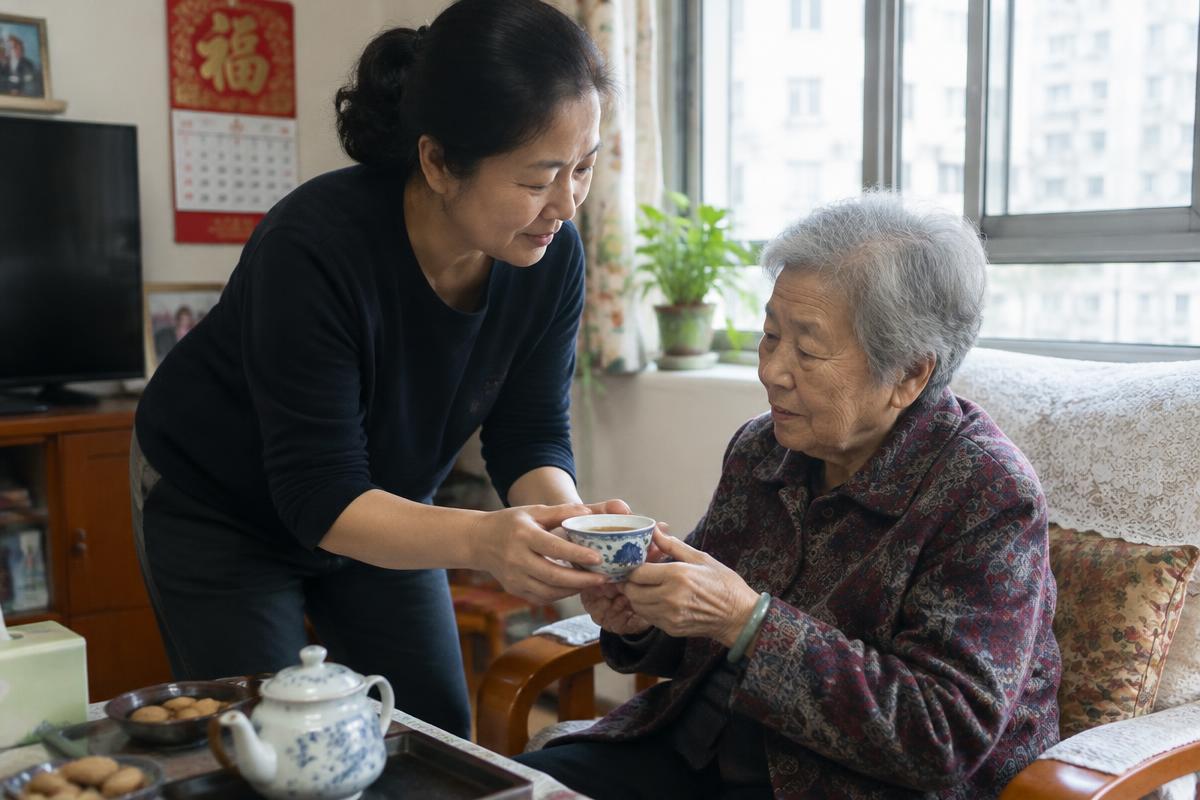
Ms Cheung, in her fifties, is a full-time carer who has looked after her mother, Mrs Cheung, on her own for years. Her mother is in her seventies with limited mobility. With her husband working away long term and her own children married and settled, almost everything falls to her: daily living, medical appointments, medication and the running of the household.
Being together all day means she knows her mother's habits and health inside out: when medication is due, when tiredness sets in, what to watch for when walking. Because of that, she always believed that as long as she was home, she could handle anything that came up.
The alarm was installed because her son Eddie insisted.
Chatting with colleagues, Eddie heard two very different true stories. One colleague's relative fell at home, called for help through a personal alarm, was taken to hospital in time and has been recovering steadily. Another colleague's father, only in his sixties, also fell at home, but no one was with him. He lost consciousness before he could phone anyone, and it was only when his wife came home from the market that anyone realised. The golden window for treatment had long passed, his mobility was severely affected, and he still depends on a wheelchair today.
Two families, similar emergencies, completely different outcomes. The contrast stayed with Eddie. As soon as he got home he suggested installing an alarm for his grandmother, so there would be another way to call for help whenever his mother could not be beside her.
Ms Cheung was not convinced at first: "There's no need, I'm with your grandmother from morning to night. Whatever happens, I can handle it."
Eddie knew how devoted his mother was, but he reminded her that even a full-time carer has to go out for groceries or run errands. The alarm could not replace her care, but it could add a layer of protection to those short absences.
After her son talked it through with her again and again, Ms Cheung came to see that his worry was fair. Once the service was installed she hung the remote help button around her mother's neck and told her firmly: "If I pop out to the shops or step away for a while and anything feels wrong, press the button right away and someone at Easilink will help you."
Sudden chest pain after an afternoon nap
The arrangement that seemed unlikely to be needed proved its worth before long.
One afternoon Mrs Cheung was napping in her room as usual. Seeing her sleeping peacefully, Ms Cheung took the chance to go out for household supplies. Mrs Cheung woke suddenly from her sleep with severe chest pain and difficulty breathing.
She wanted to phone her daughter, but the mobile happened to be in the dining room and in her condition she could not get out of bed to reach it. In her panic she remembered her daughter's words, felt for the remote help button on her chest and pressed it.
The Easilink 24-hour support service centre connected at once. The officer on duty began assessing her and learned from the brief exchange that she had severe chest pain and trouble breathing. Before the conversation could finish, Mrs Cheung lost consciousness from the pain and could no longer respond.
The officer did not wait. Drawing on professional training and experience, she judged the situation to be serious, called an ambulance on her behalf and phoned Ms Cheung at the same time.
Ms Cheung rushed home the moment she took the call. The ambulance and paramedics had already arrived. She hurried to open the door, saw her mother unconscious and was so frightened she could not hold back her tears. Fortunately the paramedics began treatment quickly and took her grandmother into the ambulance, with Ms Cheung travelling with her to hospital.
Doctors confirmed that Mrs Cheung had suffered a heart attack. Because the call for help and the journey to hospital came in time, she received the right treatment quickly, avoided more serious consequences and gradually stabilised.
A carer's voice: one more backup, one less regret
Caring for a loved one is a long journey, and even the most attentive care cannot be there every hour of the day. Shopping, errands, or simply stepping out for a moment can all open an unexpected gap in that care.
The Easilink home personal alarm and remote help button provide a direct line to the 24-hour support service centre. For seniors it is another way to call for help in a crisis. For carers it is practical, dependable support alongside everything they already do.
Coming home to find my mother unconscious was terrifying. I always thought I had her care covered, but it turns out that even a short trip downstairs is enough for something to happen. Thank goodness my son didn't listen to me and insisted on the alarm. She couldn't even reach her phone, so I would never have known what was happening at home.
Protecting your family starts with planning ahead! Learn more about the Easilink home wireless alarm and remote help button, easing the load on carers with round-the-clock peace of mind.
Contact our team anytime.
Call EasilinkMore stories
- A late-night accident and a call for help. A senior living alone shares his story
- Behind "looking after each other". The second layer of protection elderly couples need most